Mar 26, 2008

Baby, it's cold outside...


I could not help but use the words from that Tom Jones/Catatonia song to open this post. Blog reader JOSH's been out riding and it was lovely, although it didn't go to plan...

I just did a 1200 mile ride to Memphis and a few surrounding places over the weekend when the weather looked really promising. The minute I left Atlanta though, it took a turn, so here's...

...Ten reasons why 1200 miles should never be completed in three sub-10 degree days.
  1. A negative windchill factor makes the 'thrill' of the isolated twisting back roads being remembered as 'chill'

  2. It's not longer the red nosed reindeer, people now call me the bluenose idiot

  3. Blue fingers linger... long, long after that 3 hour soak in the hot tub

  4. If you talk to the guy on the K1200 at the gas station, he thinks you're gonna steal his heated jacket, his bike with heated grips and leave him with the crappy mesh jacket you're wearing

  5. Purple skies can be seen in summer too

  6. Cold weather makes you think hot chocolate isn't all that hot, until your mouth tells you so

  7. Moving in the saddle to relieve your numb backside has the wind reaching places it ought not to

  8. So what if Elvis lived in Memphis Tennessee, he's dead and a few more hours out there would have see me on my way to meet the king

  9. 700 motorcycles in a museum in Birmingham, halfway to Memphis doesn't make it any warmer

  10. It's impossible to wipe a leaky nose at 90mph with a really snug lid and gloves on

Feb 11, 2008

Mailbag #17: I have a good helmet, and a bad one...

Sparx Hornet S-07Just dropped my helmet :( have a dent on it now. Planning to use it for commutes, and buy a new one for trips. Have a budget of Rs 2000. I guess I can only get an AGV in that price, right? Any advice?
HD


My advice is to make a will. But before I explain that rather macabre piece of advice, let me give you a little background. You already know how a helmet is constructed. Now, if a helmet were to fall, say off the seat of your bike with no one in it, usually the damage will be minimal. Since there is nothing inside to compress the EPS liner, the helmet should be all right. Let us say, still useable, but retires a year early. However, if the fall was bad enough to dent the shell, then the dent itself will have either broken or compressed the EPS. That's not good. From here on out, that helmet is just a souvenir. That's part one.

Part two is the fact that I've seen your Vemar lid. And frankly, it isn't in minty shape. There are scratches all over it, the visor isn't all that clear either. So in any case, you should be thinking about replacing it soon. The question of differentiating the risk in a commute and on a long ride doesn't actually arise. Most accidents, whether you like it or not, are urban phenomena. You're far more likely to have a big one five km from your home/office that 300 km from the nearest dhaba. So the only reason to have a better lid on a longer ride is either comfort (since you will in it for a longer stretch of time) or fashion. Which is it?

Okay, enough sarcasm. My friend, get a hammer and chisel and make hole in the top the helmet – if that's what you need to see to throw it away. If you're planning to store it as memorabilia, remember to use loads of shrink wrap to pack the lid. Otherwise the foam will stink, and spiders like to live inside them.

About the budget, live a little. Stretch it just a bit. You should be able to snag a Sparx for Rs 2500 onwards. They're fit-finish and comfort levels are far, far superior to the AGV Pacific. The price includes a spare visor, the interiors are removable, its a comfortable helmet and it meets ECE 22.05, which is tighter than ISI. If you have trouble stretching the budget, try thinking of it this way. It's for your head. You get only one in a lifetime. Without it, you're no use to anyone. Again, I suggest you upgrade to a better helmet. If you don't want to, of course, you still have the AGV option. It won't compare in comfort or finish or design to the Sparx, but its a solid lid.

Whatever you end up buying, wear it whenever you ride. Stop thinking of it as optional in all situations, and don't give yourself the silly option of an inferior lid on one kind of ride and a better one for some other. Any half-serious crash will cost way, way more than the money you 'splurge' on your helmet. And it will feel even worse if you were wearing a lid you knew was inferior at the time, when a perfectly good one was wasting away on a shelf at home. Which might have saved you all the trouble.

Related links

Sep 27, 2007

Mailbag #16: Leg guards guard what?

Caughtilya-Rearset Stamp 1Hi Rearset,

I remember sometime back you posted abt why you think crashguards are no good. ( or was it the opposite ?)

Anyway , you never published the reasons why you thought crashguards are unnecessary or even detrimental.

My experience with crashes is that bikes always fall in the handlebar (widest part of a bike), footpegs and rear indicators , the silencer/rear foorpegs. So most of the impact is borne by the handlebar and muffler usually, indicators bend/break away ....the crashguard then comes in second, in preventing damage to bike as handlebars have already done most of it.

And when you crash you generally fall off and away from the bike so the crashguard doesn't help the rider ( so called protect the riders leg from getting crushed ). Anyway if you hold on the bike, chances are your knee might get saved/get less damaged by the crashguard but your hips will get hurt ,since the bike will fall on you( and the hip will take the impact).I'd say its better to leave the bike (mostly ) when you crash - and learn how to fall ! Racers leave the bike , maybe they do it deliberately too.

And I have heard that the crashguard may cause the frame to get damaged as the guard is mounted in the downtubes and the impact may transfer forces to the frame and damage it.

So what do you say - are these the reasons you think crashguards are unnecessary?

Rahul Patil

Hero Honda Glamour FII haven't touched upon crash bars so far because they invariably generate heated debates, which then turn personal... and so forth. But yes, in theory, I don't think they add any value, unless the engine sticks out where it can get hurt. Everything I have read over the years (the links I can find right now are this (see #39), this, this and this) says the the crash bars were designed to protect the engine and not the rider. BMWs and Goldwings make very obvious cases, because you can see that the factory guards wrap around the engine closely, ignoring the rider completely. I have also seen a 140+ kph on a crash bar equipped Yamaha Royal Star that left the engine completely undamaged.

I've been riding now for more than 12 years (I think) and none of my bikes, owned, mooched, borrowed or otherwise, have had 'leg guards.' Having crashed a fair number of these, I can confidently state that having leg guards, or not, makes little difference to your injuries. At least in terms of preventing or mitigating them.

If you're low siding – most common crash in our situation – you simple slide away from the motorcycle. If you are smart enough to be dressed right, you can usually pick yourself up and resume normal operation. I have seen a few proper crashes (I haven't had any... touch wood), where the crash guard produced two clear results. Cheap crash guards made from light metals, usually fold horribly, in two cases, the giant wraparound style Bullet/Shogun guard folded in around the poor riders legs. Both didn't break their legs in the process, but were bound to the motorcycles, and needed some serious help before they could limp away. The other ones, are more expensive because they are made of harder, thicker metal. These are even worse. They won't bend, but if by chance, they are stronger than the motorcycles' chasses, they will bend your motorcycle instead, which, no matter how you look at it, is not a positive outcome.

What you're saying is right. Take a bike with an empty-ish fuel tank, wheel into some grass or onto a carpet and lay it down. You will notice that the points of contact are the handlebar ends, clutch/brake levers, rear indicator, rider footpegs and the silencer (on that side of the bike). Adding or removing crash guards does very little to change this unless you have a really wide one. If you can contort yourself into the riding position on the fallen bike, you will also note that your foot is not getting crushed, has space to move around. And once more, had you dressed for the occasion, you will see that the padded areas of your jacket and riding pants are ready to absorb most of the impact. The Bullet being the exception to all of this. That motorcycle, I am convinced, actively tries to break your leg in a crash, no matter what you do – I've heard enough stories to be convinced.

The new bikes, like the 220, have much more subtle guards, which I know from experience bend and absorb impacts that might rupture the oil-cooler or damage cooling fins on the engine. They're too small to involve any measure of leg protection.

That said, motorcyclists tend to be a bit superstitious. If you've had a crash, walked away with no injuries on your legs, noticed a badly mangled crash guard, your brain will tell you it works. If it makes you more comfortable, use them. I don't like them, so I don't. Also, I am given to understand that Indian law requires a saree guard, but not a leg guard, but I have not verified that claim.

Related links

Mailbag #15: Permission to copy

Caughtilya-Rearset Stamp 1Dear friend
i'm really sorry.... for coying ur contents from ur blog with out permission... can u give me permission to copy ur contents...
please reply
john (the chap at xtrememachine.blogspot who copied the entire P200 riding impression)


Dear John,
Thank you for your sho-shweet letter. I am glad you wrote in. As I have said before, I have no problems with you carrying content I write with credit. However, I do have two conditions.

  1. You may not reproduce entire posts. At most, you may copy+paste one or two paragraphs (feel free to pick the most relevant ones) and give a link back to the original post. That way, you will get your search engine indexing done, get traffic and I will still get my traffic. Obviously, you will be required to give clear credit to me (or whichever blog you're referencing material from).

  2. Similarly, if a blog post has ten pics, you may only use one of two, rather than all, for the same reasons as above.
I hope this helps

rearset

Aug 17, 2007

Mailbag #14: Unicorn troubles

Caughtilya-Rearset Stamp 1I ride a Honda Unicorn. I do ride my bike fast but prefer to be very safe unlike others my age (I turned 20 just a few days ago). What I wanted to know is that earlier, however hard I rode my bike in the traffic it would return 50 kmpl. But off late (for the last 2,000 km or so) I have been getting 45 kmpl. I don't want to ask you how to get better fuel economy, not at all. In fact, I am not really bothered about the fuel economy, but I was baffled by the drop in mileage especially since I don't think my riding style has changed a lot. How does one analyze things like that when most of the magazines claim 55+ kmpl in the city? Is it possible that there could be something wrong in my bike (suddenly)? The authorized service station is a dreaded place to go to, most of the days they have more bikes to service than they can, so my guess is they just wash it (not even properly sometimes) and give it back. I would also like to point out that my bike has run close to 24000 km in about 22 months, previously I was running MRF Zapper-Q 100/90-18 at the back and very recently shifted to Michelin M45 3.25x18 and I do keep a check on the tyre pressure regularly. And ever since I bought my bike I have been filling up at the Shell stations only, which sell unadulterated petrol, to the best of my knowledge.

Secondly there's this frequent problem with the wheel alignment cropping up, I spoke to a few other Unicorn owners on a popular biking forum and they too seem to have the same problem. The only solution is frequent wheel bend removal and re-alignment. My query is, is it harmful in anyway if the wheel bend is removed and aligned frequently? Like every 3000 km or so.. awaiting an early reply eagerly..

C Hooligan K (no kidding)

Service
On the contrary, I think Honda's service is the best in the business. In Mumbai, at least, they promise and deliver one hour service, without fail. And to the best of my knowledge, they cut no corners.

Bent wheels
I assume you have a spoked wheel Unicorn. Spoked wheels and their bending is a normal thing especially if you ride hard. When riding hard, we tend to go over potholes and stuff at speed, which seems to transfer no shocks to the bike, but it does bend rims. Quality alloy rims, especially the OEM-spec stuff, is better at handling this, and usually will not show any wear from this kind of bashing. Removing the bend itself and realignment is the only way around it, but again, bending this often usually points to a problem with the riding style – not enough mechanical sympathy – than really a problem with the bike. If your rim is bending so often that at every service you have to unbend it, the problem lies with your riding style and you need to reconsider your choices when it comes to broken roads.

Fuel economy
Fuel economy unfortunately is a fairly nebulous thing. It's hard to replicate numbers you've read and harder still to remotely diagnose a ten per cent drop in economy. I'm certain that your tyre change has something to do with it. The Michelin is stickier than the Zapper, that will definitely push down your economy. As far reported figures go, the figures are designed to be comparable across tests, rather than hundred per cent replicable on the street. So a magazine would design a test cycle that can be used on the largest number of machines and produce a representative number. In your case, you see 55+ kpl. Plus you have to consider the rider's weight, ambient temperature and a whole host of other figures (including the fuel load during the test cycle) befre you can replicate that number. You indicate that you ride hard, this will automatically put you in a place that returns lower economy than the test results. Performance testing is one part of road testing, fuel economy test cycles tend to be gentler by design. There's little point in reporting fuel economy off a throttle-wide-open test cycle – no actually rides like that for long.

Shell, I've heard, is good fuel and accurately dispensed too, so that's not a factor. Other reasons could be smaller stuff, like your spark plug gap, chain tension and lubrication, dirt in the air filter... all of which alone make only minor deductions from the economy, but together can add up to 5 kpl.

Aug 1, 2007

Mailbag #13: 150cc decision pending

Caughtilya-Rearset Stamp 1I dunno why you publish every email you get , but I leave it at your discretion if you want to put this on your blog too, maybe it'll help someone make up his mind as to which 150 to buy.

Assume I purchase a 150cc bike now - I could then buy a 250cc or higher bike in 2008 which I would then keep as a weekend special while using the 150 for home-office commuting.

Now I have had short rides on the Unicorn & RTR ,my impression is that the Uni is more comfortable ( suspension wise and vibration/smoothness wise ) but I didn;t like th gearbox while the RTR is quite a hooligan with excellent brakes but I read it has a poor headlight. Didn't ride the CBZX but I did notice that its downtube has a cut where the exhaust header pipe exists and it then sealed with a metal plate welded on to close the cavity. That seems like bad engg practice to me but all reviews state the CBZX is a very good stable handling bike.

Can you rate the bikes : RTR , CBZX , Unicorn for the below factors ?
1.Handling (stability, esp while turning and on bad roads)
2.Comfort (bad roads again)
3.Headlamp (I have an illumination fetish you see)

So what 200cc+ bikes ( I'm looking at 250cc as the next standard ) can I expect by 31 December 2008? So far I have heard of Honda's 250 and maybe a Yamaha 250. What about Suzuki & TVS plans for 200cc+ bikes upto 2008 ? BAL would be busy with the 220 so I won't expect their rumoured 400cc until 2009 ( as it is the 220 got delayed a by so long). HH has a 350cc bike planned but not sure if it'll be launched in 2008. Can you give me more or less certain news which bikes are likely in 2008 and what format ( single/twin, air-cooled.oil-cooled , power, faired/unfaired ) they might be?

thanks,
name withheld


TVS Apache RTR 160I post some emails (as opposed to all) when I think there could be other people who might be hunting for the same information. And yes, this will appear too. 8-D

If bad roads are such an important consideration, I think you should ride the CBZX or the Unicorn and decide which you like better. I would say CBZX, but it tends to bottom with pillions and those who like the Unicorn, swear its the best thing since sliced bread as far as bad roads go.

Handling wise, when turning on bad roads, I think they would all be more or less similar. The CBZX and the RTR are very agile, which is always at the expense of stability, so yes, the Unicorn is more stable. But still, unless ride quality, especially two-up was an issue, I would not recommend the Unicorn.

Comfort is a personal thing. The RTR is a pretty committed riding position, which happens to suit me just fine. It may not suit you quite as well. Unicorn and CBZX are more 'normal' so you will have to decide after you take a ride.

Hero Hondas, traditionally have always had the best illumination with rare exceptions. Again, I don't think the difference is significant enough to be a decision making factor.

By the end of next year, Bajaj should have launched its rumoured AutoExpo'08 unveiled 400, Yamaha and Honda may also have similar displacement motorcycles out, but this is not guaranteed. I would expect that all of these will be powerful, but single cylinder machines. Twins, especially manufactured in India twins, will take more time, I think. We're more likely to receive multis via the expensive direct import route, not manufacturing... Fairings? Yes, I think they are certainly coming sooner rather than later... my two cents

I have heard of FI Karizma on the cards end of 2007 too but point is I cannot wait too long to sell my bike thanks to depreciation and if am to keep using it for few months more I think at least the rear shocks need to be replaced.

Anyway I thought the CBZX has a stiff set suspension to improve its handling . The trouble with test-rides is they are too short and on different roads that cannot provide similar conditions (I rode the Uni on a much smoother road than the RTR). Hmm... square one again.... if do buy a 150 around now it's most likely to be the RTR.

Jul 26, 2007

Mailbag #12: Karizma woes... P220?

Caughtilya-Rearset Stamp 1What is the expected life of a modern bike (chassis to be more exact)?

I have a Karizma from 2003 ,one of the earliest. 4 years on the plastics certainly have deteriorated as there is some vibration in the fairings while idling which was not there ( or much less apparent ) earlier ; blame the Pune roads for that which are like monscape after every monsoon. Also the bike doesn't handle as well as it used to, the suspension seems much stiffer ( using same rear shock setting at #3 or medium for some 2+ years ) but the damping seems to have gone bad . I have had 2 crashes on the bike and have changed the fork stanchion few months ago. Yet the front doesn't feel like it should either. I could change the entire plastics for about 5.5K , the rear suspension for 2.2K and entire front fork assy is about 4.5K.

I know of Bullets that are over 30 years old and some HH CD-100s have lasted 12+ years with no major problems. I would assume that the chassis of upper segment bikes ( 150cc and over ) should be built stronger , more durable & longer lasting than the 100c bike's , so how much longer do you think this bike can carry on further without major trouble?

As such my bike handles OK enough , tracks straight sometimes but sometimes seems to veer left when I let go of the handlebar ( not sure whether this is because of the road camber or irregular surfaces but most roads I frequent are not smooth but rather patchy ) , sometimes it seems the rear is unstable under braking . HH showroom folks say everything is fine (suspension works alright they say ) even though I have noticed the rear tyre doesn't have a constant outline while rotating( the wheel has no left-right play ) , is this a wheel alignment problem or is it the wheel rim is bent or is the tyre shape irregular (Dunlop Geocruise , 2+ years old ). Or could this be caused by worn axle bearings?

HH folks haven't been able to diagnose the problem (it's not a major thing as the bike is reliable and apart from occasional gearshift problems has given no mechanical trouble) but I like my bike handle well , and it doesn't handle well consistently (am not sure if this inconsistency is caused by road surface being irregular). So I am thinking of a new bike (Pulsar 220 foremost in mind ) but being familiar with Bajaj's gremlins I am a bit hesitant to rely on the 220 alone in case it gives up one fine day. Other bikes I am considering as the CBZ-X , Apache RTR ( I don't think it's as good as the P180 but I liked the braking ) and Unicorn ,but don't really want to go lower down the cc scale . I like the 220's lights but is the P220 really worth going for... for an existing Karizma owner?

I have been told by a fairly reliable source that Honda will bring a CBF250 based machine late in 2007 or early 2008 , and that the P220 may itself be revised early into a version 2 , and that Yamaha has no plans and may well quit India while TVS has not 200cc + bike planned for 2008. So basically I have few options in the 200cc + segment , and the Honda 250 may well be worth the wait.

What do you suggest? Spend 12K and get my bike back in shape waiting for 2008 and the Honda 250, or get the 220 ( I do know the 220 is constantly plagued by some minor like fuel gauge fluctuation and LED lamp failures ,some more serious issues like the rear disc and ECU , plus long term reliability is yet unproven and there are very few places where it can be serviced).

Revhard

Hi RevHard, sorry for the delay in replying... I've not been able to access my email for almost a week.

It's kind of hard to remotely diagnose a bike, but four years is a long time for suspension bits to hold together. Especially given our roads and the two crashes you have suffered. There are a couple of things you could do though. Try taking your bike to a HH showroom and take a new Karizma out for a spin (suspension is identical). Then, ride your bike immediately afterward and play with preload and try to recreate the same feel. If the feel does not come, its time to bin the bits and get new ones. Don't be tempted to buy a different brand from another bike... stick with the OEM bits. Also try to figure out which end is more troublesome for you. Forks can come back with a change of oil and if push comes to shove change the springs. Did the forks get bent badly in the crashes? If yes, they could be causing the bike run left and in that case, a full replacement may be needed.

Chassis life is practically infinite, but it's the crashes that kill them. Even in a small off, you could bend forks, triple clamps and other small bits. The bike seems to run fine or a while, but as the bearings grow older the slight deviations begin to become more serious in the manifestations.

Also, check you rear wheel part by part. Compare the hub circumference while rotating to a fixed point, like some part of the suspension to see if that is bent. If that's allright, check the rim edge. And then check the tyre. If the outline, as you put it, is not constant, your handling ills could simply be cured by identifying and fixing the rear end.

To check for worn bearings, just slot the bike in gear on a center stand and try to move the rear wheel (not rotate, move). It should not have the slightest bit of play.

And just ignore the plastics... they will eventually rattle if the going is tough.

Should you plump for the 220, and does it constitute an upgrade from the Karizma. Hmm... I wouldn't. In performance terms, the 220 is definitely ahead, but not that far ahead. Technologically, it's leaps and bounds ahead and all that. But at the end of the day, you're upgrading from a lazy-fast 223 to a faster, sportier 220. And the rest, no matter how long the list of features is, is icing, and not cake. I would rather suggest you save up a bit and ride the Karizma one more year... and see what your choices are then.... There's more, faster stuff coming next year... As far as Honda CBF250 (that'd be great), Yamaha quitting India (no way, total rumour, watch out for them next year)... that's all just speculation.

Mailbag #11: Kit & RD350 as first bike

Caughtilya-Rearset Stamp 1Hi, I need to buy some riding gear and am wondering where i should get it from(i live in mumbai) what helmet do you recommend and what other riding should i get and what would be the approximate cost of the above. also would it be advisable to get an RD 350 as a first bike. i know how to ride but this is going to be the first bike that i will actually own.

SK

Hmmm.... riding kit is easily sorted. Buy from cramster.in or planetdsg.com, I trust both sites and the kit they sell. You should aim to get a jacket, helmet and gloves. And if you still have cash left, buy at least a knee protector set, if not riding pants.

A jacket should cost you between Rs 5000 and Rs 15000 depending on what you pick, gloves should be Rs 1500-2500 and an Indian helmet (Vemar, AGV or Bieffe) should set you back Rs 2000-odd – contact Alibhai Premji near Minerva Cinema. 23099313 is the phone number I think. Funky in bandra also sells lids, I haven't the number, but search on google and it will pop up (try sulekha classifieds).

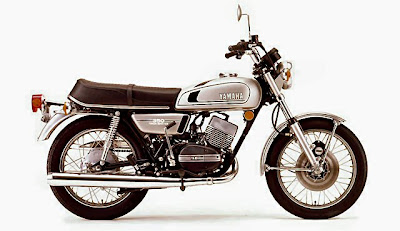
Yamaha RD350B 1973 from yamaha-france.comAn RD 350 as a first bike is a very interesting idea. It will need a bit more care in terms of maintenance as well as riding and return fuel economy that will close to a car's. But if you can live with that and be willing to ride gently until you're ready for harder riding, I don't see why not.

Related Links

Jul 21, 2007

Mailbag #10: Tyre and Wheels for CBZ

Caughtilya-Rearset Stamp 1Hi, please answer my queries;
Bike : Hero Honda CBZ | Age : 5-6 years

  1. Wanted to change my tyres...My old ones(Original fitting) are the Dunlop ones with specifications: Front- 2.75 , Back- 100 90. Now have almost finalised on the MRF Zapper FS (Front) and the Zapper Q (Back) Also considering the 120 for back (aesthetic purpose) Please enlighten me on benefits and drawbacks and any other option possible.

  2. Was interested in Mag wheels(only for aesthetic purpose).I got a deal of 3700 Rs. for Aluminium ones and 4700 for Casting ones. Firstly, what are the benefits and drawbacks of Mag wheels Secondly,which of them should i go for, budget also being important, but not the deciding factor

  3. Seems like my shock absorbers(back) are not good anymore,.... Firstly, how do i actually know if i need to change the shock absorbers Secondly,How is a substitute like a 'Gabriel' brand (6 month warranty)- (for the purpose of less expenditure)
Prince


Hero Honda CBZ X-TremeThe tyre brands choice is fine, but the 120 will slow the bike down when you try to turn into the corners. It will make the CBZ, which already feels like a bike with a fast front and a slow rear when you pushing along around corners, seem even more reluctant to turn in. As far as the mag alloy wheels go, sounds dicey. The only alloys I trust are the Enkeis that come OEM on the various bike today. While these are expensive, they last. The chinese ones just break. So I don't know... Also, the mags are heavier than the spoked rims, so that too will make the bike feel more lead-footed. If your shocks are not doing their job (and five-six years on, they probably aren't) then its time to bin them. Dont get them reconditioned, it isn't worth the money saved. Replacing them if non-OEM shocks (from the HH spares counter) again is dicey. If Gabriel replicates the CBZ OEM shock in terms of spring and damping rates, it should be fine. But if the rates don't match, your CBZ could end up feeling worse...

Jul 16, 2007

Mailbag #9: Unicorn or CBZ X-Treme?

Caughtilya-Rearset Stamp 1I know you have answered such questions before, but please advise. I am planning to buy a 150 and I have zeroed in on the Honda Unicorn and the Hero Honda CBZ X-Treme. I have ridden both, but I cannot decide which to buy. I think you can help me decide.

  1. Everyone seems to saying that the X-Treme engine is rough above 60-70 kph and that vibration is passed on to the rider. Is this true? How bad is it?
  2. The suspension seems to be hard according to some reports, is that true?
  3. The most important thing is: How is the pillion comfort? Especially for the ladies? (I know this is a wrong question to ask about a hooligan bike like the CBZX... but we can only own one bike at a time and use it for the most purposes, right?)
I am waiting for your reply before I decide what to buy?

-Name Withheld

Hero Honda CBZ X-TremeIf you are going to carry a pillion often, you should definitely buy the Unicorn. The CBZX vibrations are not that bad at all. Have ridden it hard over fair distances without any discomfort. I have no problem with the suspension either, but adding preload helps when you are riding with a pillion on the CBZX. The Unicorn betters the CBZX in pillion comfort terms, but never feels as fast as the CBZX... Also see Unicorn vs CBZ X-Treme: Sibling rivalry

Jul 9, 2007

Mailbag #8: Apache RTR 160 – Not Convincing

Caughtilya-Rearset Stamp 1From a Vibrator to a smooth 'no' vibe engine, to seeing 120 kph "very" easily on the speedo, to the best handling 150cc in the market, to be feeling 30 kph less at 76 kmph.... is there more to this than what meets the eye? Did TVS suddenly get a magic wand or has the bike come straight from the gods.... I for one am not convinced. Over to you...
Lavkesh

TVS Apache RTR 160Actually, the answer to that question is quite simple. And no magic wands are being waved either. To a manufacturer conversant with good engineering, eliminating vibration is a very simple matter. You either attack the primary vibes from the motor, or you add a set of dampers that ensure that not much vibes appear in the three-odd places where a rider might feel it – pegs, bars and tank.

Adding displacement is another fairly straight-forward game too. You can use computers to model a whole bunch of (bigger) bore, stroke combinations and select the one you like. Run it on prototypes, see if you like it and when you do, more power is there for the asking. 120 kph? They could have got more. I, for one, would not be surprised to see a TVS Apache 160 Racebike touch much, much higher speeds.

What was wrong with the 150 handling? Stability. Stability, for ages, has been solved by lengthening the wheelbase. And the best, most productive way to lengthen the wheelbase is by increasing the swingarm length, which brings more stability and increases the ability of the rear tyre to 'hook up' better. For a manufacturer, this is the equivalent of a patch for a set of small niggles in a new operating system, so to speak. All of this takes time, agreed, but it isn't magic, magical or a miracle of sorts.

What I am saying is that the primary thing that TVS has done with the 160, is solve the problems that stopped the 150 from being truly jaw-dropping. The potential was always there. Another example of a similar bike, although still-born, was the Graptor. There was so much that LML could have done with that bike.

However, the biggest change, the real reason why the Apache 160 is such a great ride, is a change in stance. You see, as a small manufacturer (compared to Bajaj and HH), TVS always needed to consolidate its volumes and that was an overriding consideration. This, usually, means engineering and motorcycling compromises aimed at snaring the largest possible number of prospective customers. It means you cannot give your bike special abilities. You focus on making it adept and comfortable in a variety of roles. Would a small air force benefit from having a bunch of pilots who were okay fighter jocks, decent bomber captains and passable chopper flyers as well?

What happened with the 160, is that someone at TVS woke up and realised that the reason the TVS Apache
(like many, many bikes all over the world) wasn't doing as well as they had expected was the fact that the bike didn't really have a focus beyond good sales. That approach never works. Look at most of the 1000cc or 600cc bikes, and you will see that the popular ones are almost always good at one thing, and borderline crap at others. It's the focus that brings riders to the point where they reach into their pockets.

With the RTR, I think, TVS decided to go radical and make an all-out sporty bike, rather than a sporty commuter, that could also handle and would also race and would also... and so forth.

The R&D team, now had a clear focus. Clear focii usually mean solutions to problems are found faster and are easier to implement without interference from other involved departments (like marketing and sales). That's what happened, in my opinion. And for once, it has come together in spectacular fashion.

If you are still not convinced, my friend, just hop over to the nearest TVS dealer, I promise you will not have wasted your time.

Related posts

May 31, 2007

Bajaj Pulsar 200: A forkful of thoughts

Caughtilya-Rearset Stamp 1Rearset Hi,

As you would have noticed,the Pulsar 200 fork episode has been highly publicized and much controversy revolves around the same.If you can put up a post and clear the issues and bring out FACTS it would help confused bikers who might be relying on hearsay stories!

Arpan

The reason, Arpan, I haven't put up anything about the fork, is precisely because there are no hard facts beyond the photos. From what I know, the forks did break (a total of four reported on the Net), but some Bajaj dealers (mostly non-probiking, I think) don't even know that. I also know that Bajaj aggressively went out and replaced those forks with a redesigned one.

Manufacturers, unfortunately, are not infallible. This has been proved over and over and over again (and there are tons of examples, in both the brick-mortar world and in the online business). So to me, the issue, life threatening as it appears to be the average user, is not something I would get worked up about. Is it serious? Of course. But is it something that needs lots of debate? If what I hear about Bajaj's response is true, I think no debate is required. If I were really paranoid, I'd simply put off an impending P200 purchase and wait for a few more months to pass...

Yes, if I were a P200 customer and this happened to me, I'd be very cross as well, but as the saying goes, shit happens.

In the international community, as long as a manufacturer comes forward and fixes the problem as fast as they can, it is considered par for the course. If you like, visit NHTSA (american safety agency) and see the number of recalls. The difference purely is that in the US, recalls are posted up, and in India, they are handled quietly. As long as they are handled, I don't think it is a big deal. Again, I must reiterate that announcing the recall and making it public is the better way to handle it, but given that P200 sales volumes aren't really that high, probiking dealers, I assume, would have no trouble locating the owners and informing them of the replacement.

Mailbag #5: tyre pressures

Caughtilya-Rearset Stamp 1From this mail onwards, I'm switching the font convention. Since my answers are always waay longer than the questions, I'm going to take the regular font for my text and that italics font for the queries.

Long time. Got a question for your mailbag : )

This one is about tyre pressure. Your post on unidirectional tyres got me thinking. This one is in two parts…

Q1 While the recommended front tyre pressure stays the same, the rear tyre has 2 'settings', for single and pillion riding. More often than not, I find myself doing a mix of riding. Whether to drop people off or to pick them up. What's the solution for this? Do you go with one setting and ignore the other or do you average the air pressure? Currently, I use the pillion setting when I know that I'm going to have a 'mixed' ride.

Q2 Ok, I'm sure you've seen the blaze tyres. maybe its just me, but when I look at them, their 'ground contact patch' seems circular rather than the 'flat' of a pulsar etc. I've not had a problem with them in the dry, but add some water on the road and I feel the rear acting up. I first felt that while riding in the wet sand at Gorai (the waves were coming in... no, i was not recreating some movie scene, I got caught in the high tide) and then again on regular road which had water splattered on it. do I have to be extra careful with this near circular cross-section tyres? any other recommendations?

Nyctophobia

A1 I actually tend to ignore manufacturer recommendations (I'll call it MRP, manufacturer recommended pressure) almost entirely, and when I do use them, I look at them as a guideline. I am told this isn't the best way to do this, but I'm comfortable with it. One component in the MRP is the superior puncture resistance of a more inflated tyre. Another, is the best compromise between a larger contact patch and higher fuel economy. But the crucial one, is the rider's weight (or in the case of pillion+rider) their combined weight. As is with many things motorcycling, the MRP, therefore, is the best compromise for the rider/combination they profiled for that machine. Which isn't me in many ways.

For instance, I ride much harder than the average rider, so my tyre loads must be different. I use a lot more lean angle, a lot more brake force (I brake later, and harder, rather than softly and earlier). For this, I need more grip, and not more economy, I find that keeping the front tyre to about 24 PSI works for most bikes. On days when I knew I was going to go hell for leather, I'd take my RD350's front tyre down to as little as 18. And my mechanic, an ex-racer, prefered 14! Similarly, I tend to let the rear tyre pressure also be far lower than MRP. It varies with the front, but the difference is usually between 7-10 PSI more than the front tyre. Now, when I have a passenger, I will always alter the pressure. Since I don't ride anywhere close to as hard when I am two-up, I find it convenient to let the pressure be the MRP.

Since tyres are one of the most crucial parts of the ride, I tend not to look at changing/refilling tyre pressure as a chore. You already know I am an OCD case, so I carry my own digital tyre pressure gauge with me...

But to answer you question, if I had to pick between the solo and pillion for a mixed ride, I would also pick the pillion setting.

A2 It's just you. The tyre profile, to reduce it to a very simplistic level, has but one effect. The more rounded it is, the easier the bike will lean. Race bikes, for instance, have tyre profiles that look almost like cones so that they can go from the vertical to knee down in no time at all. So, the Blaze's more rounded tyre, versus Pulsar's more flat tyre? It's in your head as far as acting up in the wet is concerned.

However, when you are riding in the wet, tyre pressures are an interesting debate.

One school of thought says, over-inflated tyres work best. The extra tyre pressure reduces the contact patch, increasing traction (the theory is that the same weight over a smaller patch produces more force pushing downward and therefore more grip) and reducing the chances of hydroplaning (extension of the same logic). The other school of thought says, underinflate. Lower tyre pressure makes for a softer tyre (sidewalls become more absorbent to shocks and help the transition of power from the bike to the road smoother). The wider contact patch offers more grip (force per square inch goes down, but a larger contact patch means more braking or accelerating force can be applied). Any extra heat is taken care, because the tyre is water cooled and while hydroplaning will occur earlier, you only need to be really cautious through standing water. And of course, there is the third school that believes both theories are total bull and only the recommended pressures are the best path. I don't know if I am right or wrong (which is why this is a debate), I subscribe to the underinflate school of thought... But maybe this season, I'll try the recommended pressure school and see.

Here are some links on this subject that I found interesting

May 24, 2007

SphiMX ready for launch: Mummy!

SphiMX: King Tut goes motocrossingSphiMX: King Tut goes motocrossingSphiMX: King Tut goes motocrossingSphiMX: King Tut goes motocrossingSphiMX: King Tut goes motocrossingSphiMX: King Tut goes motocrossingThese are the first pics of an Egyptian (obviously) motocrosser that is set for launch. India plans remain a little iffy, the company spokesman said, 'We're calling it the SphiMX. Which is a fairly obvious pun on the famous Egyptian icon, The Sphinx and the role intended for the motorcycle, motocross. Our inspirations include King Tut's death mask and the Honda CRF250X. We believe the combination is what every warm blooded, fez-wearing Egyptian motocross fan has been waiting for.'

When prodded further most painfully, he added, 'India plans are still at a very nascent stage. We're not sure Indian MX enthusiasts actually exist in commercially viable numbers – just look at what happened to the Kawasaki SX100 and the Funduro. In any case, Rustom Patel wins everything. Besides, despite the obvious success of The Mummy series of films, we're told that having Akbar's mug on the bike would probably make it more viable for sales. But then we will not be able to market the SphiMX name, it would to be something like AkMX, which you can see doesn't quite have the same ring...'

No, no, of course I'm kidding. first_synn who did the trellis CBZ, sent in this rather good looking motorcycle... Thanks first_synn, it looks gorgeous. Impractical, totally unsaleable, but gorgeous.

I plan to have a custom bike built soon, with a Bollywood theme called ChakMX. Will be in touch...

May 22, 2007

Mailbag #4: Trellis another story

Caughtilya-Rearset Stamp 1Yo rearset...

Your take on the Uni V/s X-Treme comparo got me thinking, so WHY wouldn't I buy an X over the Uni? Trust me, i thrive on performance, but this is one rare case where the lower powered bike wins my vote.

So, here's why the Uni gets my vote: The more i look at the X, the more i hate it's "Oh no, somebody dropped a cement beam on me" looks. Nothing that Uncle Photoshop can't fix. 10 mins of tinkering, and i arrive at this. Nice, no? Yeah, me digs trellis frames.!


Add a set of proper rearsets for the rider (after junking that fugly footpeg sub frame. The CBZ classic's sub frame looked a lot more, er.. classier) and a set of high mounted pegs, a la SBKs for the pillion (pillion ergonomics aren't exactly topping my list of priorities), and may be a higher angled exhaust, and of course, goiter removal, and we have a winner....

Till then, it's the Uni with the aforementioned set of footpegs (or even the CBZ classic sets. They are timeless) for me. And maybe, a little work on the cyl head to make her whoop the X to Gurgaon and back. Now can i swap the fairing with that of the older Uni please?


first_synn

Interesting... It's a far-fetched dream, unfortunately. Most Hondas use a twin spar or a 'diamond' frame, and ours gets the latter. What I don't get is why our manufacturers don't sell aftermarket parts. Someone who returned from Indonesia recently tells me that Yamaha, for instance, sells the Gladiator there (under another name, I think). And you can buy a pair of bolt on rearsets for the bike off the shelf at any Yamaha showroom....

May 21, 2007

Mailbag #3: New engine in old frame?

Caughtilya-Rearset Stamp 1Hello rearset, fantastic blog you have up. It's always a pleasure visiting your site.

I had a small query, wondering if you would know something about it..

Can one change the engine of a bike into a higher capacity one? For eg. : Please consider a Classic Pulsar 150. Is it possible to fit an engine of the 200cc or 220 cc Pulsar on that same chassis? Is it going to be the same cost as buying a new bike itself?

Hey if you feel like putting up a post about something like this it would be great..

Thanks..
Aditya

Thanks for the compliments about the blog. But, I'm sorry it isn't possible.

  1. The chasses are completely different, so the engine will not directly bolt on to your 150 chassis.

  2. The chasses are also built to handle two different loads. Since the 200 and 220 engines produce much more power, they have stronger (and longer) chasses. Which could mean two things – your 150 chassis could break under the stress and cause a fairly serious accident, or you will need to brace the chassis to handle the extra loads. Bracing a chassis is no walk in the park, so you will either have to learn what amounts to a black art, or you will have to find someone who knows, and they will probably charge you a hefty sum to do this for you.

  3. Where will you get the engine? Bajaj, without a doubt, will not sell you an engine, so you will have to browse chor bazaars, look in insurance salvage yards and so forth to locate a new motor, with carb and airbox. Since the 200 and 220 use a much larger airbox, said airbox will also not fit in and you will end up having to run an open air filter, which means fiddling with jets to get it to run right.

  4. All of the above will cost a fair bit, which may actually turn out to be way more than your 150 is worth.

  5. I've so far not even touched upon the legality of the mod. Technically, I suspect that it would void your registration and everything a cop stops you, you'll be in fairly thick gravy.

  6. Is it really worth the hassle?

  7. If you're just looking for a naked headlamp on the 200, buy one and throw the fairing away

  8. If you're looking for save money on the upgrade to a 200, this isn't going to be a good way to go about it.

May 18, 2007

Mailbag #2: Should you buy kit while learning?

Caughtilya-Rearset Stamp 1I've been following your blog closely. Thanks for all the gyan that you've been sharing with the world. Let me tell you, you're simply great at it. Your blog is a great read.

Are there any places in Bangalore that you're aware of, where one gets good riding gear? I'm a rookie biker. Have bought my first bike - the new Honda Unicorn - and have been riding it for nearly a fortnight now (and I've done ~950 kms so far. :-)). I was wondering about getting a riding gear set; Admittedly, I haven't apparently mastered the art of riding as much before I can call myself an average rider. Is it advisable to invest much on it? Cramster jackets + gloves come around to Rs 6000.

1. Is it really necessary?
2. Is it worth the investment?
3. What about getting a bit cheaper - i mean getting a
foam leather jacket and cheaper pair of gloves?

Please let me know what you think about a learner getting riding gear and stuff.

Sorry for the trouble. Thanks a ton, for what you've been providing us with so far and even more for whats to come. :-)
-TS

High res image of Cramster Riding GearDear TS,

Thanks for the compliments and I'm glad you asked that question. The short answer is as follows. Riding kit, at a fundamental level, is protective in nature. It is designed to form a layer that absorbs impact (the thud when you fall) and abrasion (the scraping noise) when you fall. So, when is it a good idea to wear riding kit (which presumes that you own some, of course)? That's easy, wear kit when you intend to fall. And since you never intend to fall, and cannot predict when you will, the only way is to wear it every time you go out for a spin.

The bush I'm beating frantically around, basically says that riding kit is the best investment you could possibly make. The better kit you buy the sounder your investment. If you're a newbie, you're more likely to have a fall as you come to grips with the whole riding thing, and so, you need kit a lot more as a newbie. In most cases, your riding jacket will absorb a small fall or two without any visible damage, so you'll be fine. To return to your questions

  1. Is it really necessary?
    In my opinion and experience, yes. I'd go so far as to say it is vital.

  2. Is it worth the investment?
    Absolutely. You're lucky that there are now Indian brands offering inexpensive, good quality kit. This was not the case as recently as two or three years ago. I've scrounged for months, bought stuff online, waited months for relatives/friends to come back with the booty... And having now spent (cumulative over the past 13 years of riding) more than Rs 75K on kit, I don't regret a paisa.


  3. Foam leather/Gloves?
    Dude, you're asking a question like, 'Would it be okay if I went to a cheaper school? They teach you poorer english (and science etc), have no facilities whatsoever... do you think it would affect my career?' There's an obvious answer, right? Foam leather has no protective qualities whatsoever (it is still better than nothing, of course), ditto the cheap gloves. If the money is tight, split the purchase. Get the jacket now and the gloves in a month or two. And wear cheap gloves until you get proper ones. If money isn't an issue, buy the best kit you can find.
Riding gear is like insurance, you think it's a waste of money until you need it. And when you need it, you'd better have the best you can afford.

Related posts:

Nov 22, 2006

Mailbag # 1

Caughtilya-Rearset Stamp 1Yeehaa! I get to do my own mailbag. rearset's first mailbag. Yippee! etc.

Fan mail

I'm a avid reader of your blog. I really appreate the quality of the content of your posts. I like your perception of the indian motorcycling scene. Your notes on upcoming bikes and riding gear is also well set.. awesome!.. it's just what the indian biker needs to know and get tuned to .. great work indeed.

Your content is far better than any magazine that would 'attempt' to cater to an indian motorcycle enthusiast. Obviously mags will only carry content that will help sell it n earn revenues to the publisher. Little would they care about stuff that really matters. On the other hand I wish that your blog lives long and continues to provide free and true value to what the indian motorcycling audience needs..

I'm a tourer myself. I've toured around 30K kms so far around India on my Pulsar 180 dtsi. I'm 23, working in Pune.

Keep up the good work...
Cheers and best wishes,
Anonymous

It's always nice to hear that your work is appreciated. As far as your comment on Indian magazines goes, I think they're doing okay. I believe they're as honest as possible most of the time. Stay in touch

Helmet is a must... Awesome ad
Couldn't resist sending this to you.

Helmet Ad: Ganesh
Ankit Malhotra

I've seen that ad somewhere, and yes, I do think it's a terrific one. If I had a hi-res file, I'd put it up on various notice boards in the office and around... Thanks for that!